Cordierite DPF Honeycomb Substrate
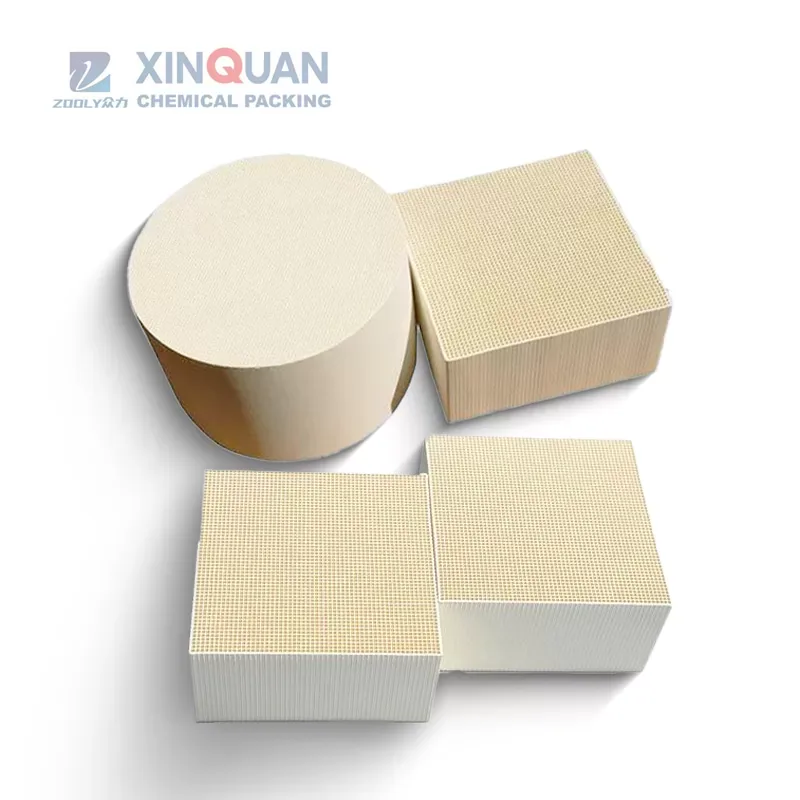
A diesel particulate filter is a wall-flow device: the channels are alternately plugged, so exhaust is forced through the porous wall, and soot is trapped on the surface and inside the wall while gas passes through. The substrate has to combine high filtration efficiency with low back pressure and enough thermal shock resistance to survive regeneration, which is why cordierite — low expansion, inexpensive and well understood — is the default material for the duty.
Specifications
| Parameter | Detail |
|---|
| Form | Wall-flow honeycomb with alternately plugged channels |
| Material | Cordierite |
| Function | Soot filtration with periodic regeneration |
| Supply form | Bare substrate; wash coating and canning are separate steps |
| Selection inputs | Engine size, exhaust flow, soot load, regeneration strategy, back pressure limit |
Available Materials
Cordierite
Typical Applications
- Diesel passenger car and light commercial DPF
- Off-road and construction equipment
- Stationary diesel generator aftertreatment
- Retrofit particulate filters
How the Options Compare
Against silicon carbide substrates, cordierite is cheaper and has lower thermal expansion, but lower heat capacity and a lower thermal limit; silicon carbide is chosen for the heaviest duty and for high ash-loading applications. Against flow-through or partial-flow filters, wall-flow gives much higher filtration efficiency at the cost of a back pressure that has to be managed by the regeneration strategy.
Frequently Asked Questions
Why is cordierite the default DPF material?
Low thermal expansion means it survives the sharp temperature gradients of regeneration without cracking, and it is inexpensive to extrude in volume. For most light and medium duty it is the economical answer.
When is silicon carbide preferred?
Where the thermal load or ash loading is high, or where the filter is large. Silicon carbide tolerates more heat and holds more ash before back pressure becomes a problem, at higher cost and with more demanding canning requirements.
Is the substrate supplied coated?
Normally as a bare substrate. Wash coating with a catalyst and canning into the housing are separate operations, and we will confirm exactly what is being supplied so it is not assumed.
What decides filter life?
Ash, not soot. Soot burns off in regeneration, but ash accumulates permanently and eventually raises back pressure beyond limit. That is why ash loading, not just engine size, is one of the design inputs.
More Honeycomb Ceramics
Ceramic honeycomb heat exchange media for RTO units. High surface area at low pressure drop, thermal shock res…
Ask about cordierite dpf substrate
Tell us your flow rate, medium and operating conditions — we recommend the right packing and internals, and quote factory-direct.
Request a Quote WhatsApp