Carbon Molecular Sieve (CMS)
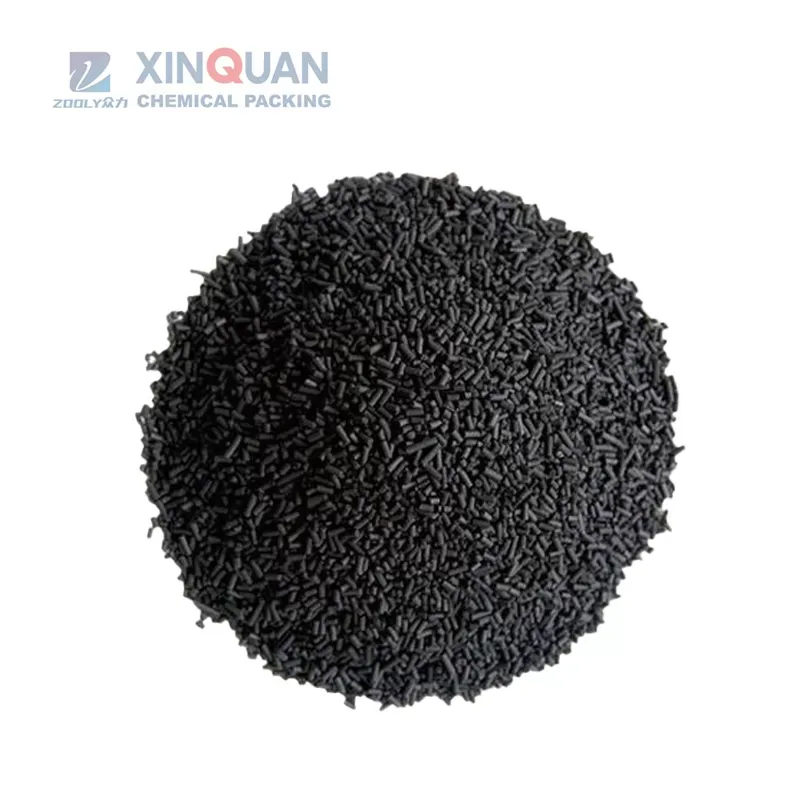
A carbon molecular sieve does not separate oxygen and nitrogen by size in the way a zeolite does. It separates them by speed: oxygen diffuses into the carbon pores much faster than nitrogen, so a short adsorption cycle takes the oxygen out and leaves a nitrogen-rich gas behind. That kinetic mechanism is why CMS, and not a zeolite, is the standard media for PSA nitrogen generators.
Specifications
| Parameter | Detail |
|---|
| Form | Black spherical or pelletised carbon |
| Function | Kinetic separation of oxygen from nitrogen in PSA cycles |
| Regeneration | Pressure swing only; no heat required |
| Feed treatment | Air must be dried and oil-free ahead of the bed |
| Purity and recovery | Trade against each other, and both are set by cycle design |
| Selection inputs | Required nitrogen purity, flow rate, operating pressure, cycle time |
Available Materials
Carbon molecular sieve, spherical · Carbon molecular sieve, pelletised
Typical Applications
- PSA nitrogen generators
- On-site nitrogen for food packaging
- Laser cutting and heat treating atmospheres
- Chemical blanketing and inerting
- Pharmaceutical and electronics nitrogen supply
How the Options Compare
Against zeolite 5A or 13X, carbon sieve gives nitrogen rather than oxygen: zeolites hold nitrogen preferentially and are used to produce oxygen, while carbon takes up oxygen faster and is used for nitrogen. Against membrane separation, PSA with CMS reaches higher purity at modest scale, while membranes win where moderate purity and large flow are acceptable and simplicity matters more than recovery.
Frequently Asked Questions
Why carbon and not zeolite for nitrogen?
Because the mechanism is different. A zeolite holds nitrogen more strongly than oxygen, so the product is oxygen. Carbon molecular sieve takes up oxygen faster than nitrogen, so the product is nitrogen. Running a nitrogen generator on zeolite performs poorly by comparison.
What purity can be reached?
Standard PSA plants reach high purity routinely, but every step up costs recovery, and therefore feed air and power. Tell us the purity the process actually needs rather than the highest figure quoted elsewhere, and the plant will be smaller and cheaper.
Why does the feed air have to be dried?
Water is adsorbed strongly and blocks the pores, and compressor oil carries over with it. A dryer and coalescing filter ahead of the CMS bed is not optional; it is what decides how long the bed lasts.
How long does a CMS bed last?
Several years in normal service. What shortens it is contamination and mechanical attrition rather than the carbon itself, which is why pre-treatment and a proper fill procedure matter more than the grade chosen.
More Adsorbents & Desiccants
Activated alumina balls for gas and liquid drying, fluoride removal, hydrogen peroxide purification and Claus …
3A molecular sieve (potassium form) for drying cracked gas, olefins and ethanol where CO2 and heavier componen…
4A molecular sieve (sodium form) for gas and liquid drying, CO2 and H2S removal, refrigerant drying and static…
Ask about carbon molecular sieve (cms)
Tell us your flow rate, medium and operating conditions — we recommend the right packing and internals, and quote factory-direct.
Request a Quote WhatsApp