Potassium Permanganate Impregnated Activated Alumina
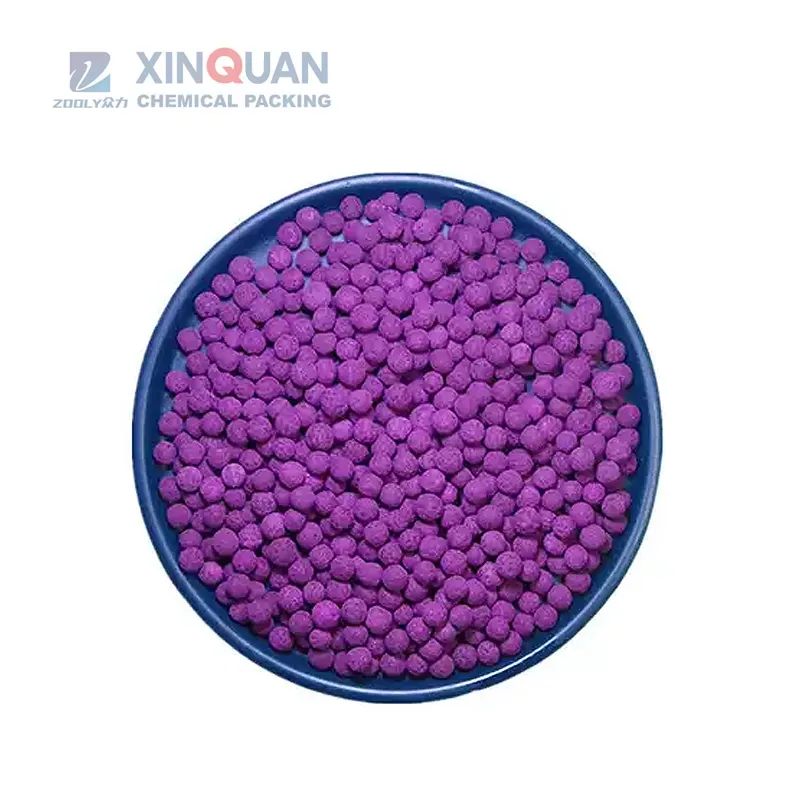
Plain activated alumina adsorbs; potassium permanganate on alumina oxidises. The difference matters when the contaminant is hydrogen sulphide, a mercaptan or an odour compound, because oxidation converts it into a sulphate that stays in the bed instead of coming back off on the next cycle. It is a consumable rather than a regenerable adsorbent, and it is specified for exactly that reason: it removes the last traces instead of cycling them.
Specifications
| Parameter | Detail |
|---|
| Form | Spherical beads with permanganate impregnation |
| Base | Activated alumina |
| Function | Oxidative removal of H2S, mercaptans, odours and some nitrogen oxides |
| Regeneration | Not regenerable; the media is consumed and replaced |
| Bed life | Set by the total mass of contaminant to be removed, not by cycle time |
| Humidity | Oxidation needs a humid surface; very dry or condensing gas both hurt performance |
| Selection inputs | Contaminant type and concentration, flow, humidity, required outlet level |
Available Materials
Potassium permanganate on activated alumina
Typical Applications
- Sour gas polishing downstream of amine units
- Odour control for air and ventilation streams
- Sewage and wastewater off-gas treatment
- Hydrogen sulphide removal in biogas and landfill gas
- Guard beds ahead of molecular sieve or catalyst
How the Options Compare
Against plain activated alumina, the impregnated grade removes H2S and mercaptans that plain alumina only partly holds and then releases. Against a zinc oxide guard bed it works at ambient temperature and at lower cost for trace duty, while zinc oxide is the better answer for bulk sulphur removal at high concentration. Against activated carbon it avoids the fire risk that spent carbon carries when loaded with sulphur compounds.
Frequently Asked Questions
Can it be regenerated?
No. The permanganate is consumed as it oxidises the contaminant, and the bed is replaced at breakthrough. That is normal for an oxidative medium, and it is why the bed is sized on total contaminant load rather than on cycle time.
What happens to the spent media?
It contains manganese compounds and sulphate, so it is handled as chemical waste under local rules. We can tell you what the spent bed will contain, but disposal is governed by where you operate.
Why does humidity matter so much?
The oxidation needs a humid surface to proceed. Very dry gas gives poor performance, and condensing water blinds the bed. There is a workable humidity window, and it should be checked before the bed is designed.
Is it suitable for biogas?
Yes, for polishing after bulk desulphurisation. Biogas carries water and trace compounds, so the bed normally sits after drying, and its life is set by the residual H2S loading it sees.
More Adsorbents & Desiccants
Activated alumina balls for gas and liquid drying, fluoride removal, hydrogen peroxide purification and Claus …
3A molecular sieve (potassium form) for drying cracked gas, olefins and ethanol where CO2 and heavier componen…
4A molecular sieve (sodium form) for gas and liquid drying, CO2 and H2S removal, refrigerant drying and static…
Ask about potassium permanganate on alumina
Tell us your flow rate, medium and operating conditions — we recommend the right packing and internals, and quote factory-direct.
Request a Quote WhatsApp